
It is crucial to understand that lipedema is a progressive condition that develops gradually over many years, rather than presenting all its signs and symptoms all at once. Recognising this slow progression is essential for patients, as it highlights the fundamental difference between conventional obesity—which often follows a relatively short period of an unbalanced diet or an unhealthy lifestyle—and the distinct lipedema stages. These stages advance at a very slow pace and develop entirely independently of a person’s lifestyle choices or dietary habits. In this article, we will explore the different stages of lipedema in detail to help you better understand how this condition evolves.
Understanding Lipedema Stages and Symptoms

Lipedema typically progresses through four distinct phases, each characterised by specific physical changes and symptoms that increase in severity over time. Understanding these Lipedema stages is crucial for securing an accurate medical diagnosis and accessing the right tailored treatment plan at the right time.
Here is a detailed breakdown of the four stages:
Read also about lipedema dubai
Book An Appointment
Stage 1: The Early Onset
- Physical Features: The skin surface remains smooth and fully intact. However, upon palpation (touching), small nodular fat structures can be felt beneath the skin, particularly around the legs or hips. These early fat deposits typically feel like small peas or beans.
- Associated Symptoms: Mild pain, a subtle feeling of heaviness in the affected limbs, and a noticeable tendency to bruise easily.
Stage 2: Moderate Progression
- Physical Features: The skin texture changes, becoming uneven and indented, often resembling an “orange peel” or mattress-like appearance. The subcutaneous fat nodules grow larger and become more palpable.
- Associated Symptoms: An increase in both daily pain and sensitivity to touch. The persistent feeling of heaviness intensifies, beginning to interfere with natural movement and routine daily tasks.
Stage 3: Advanced Lipedema
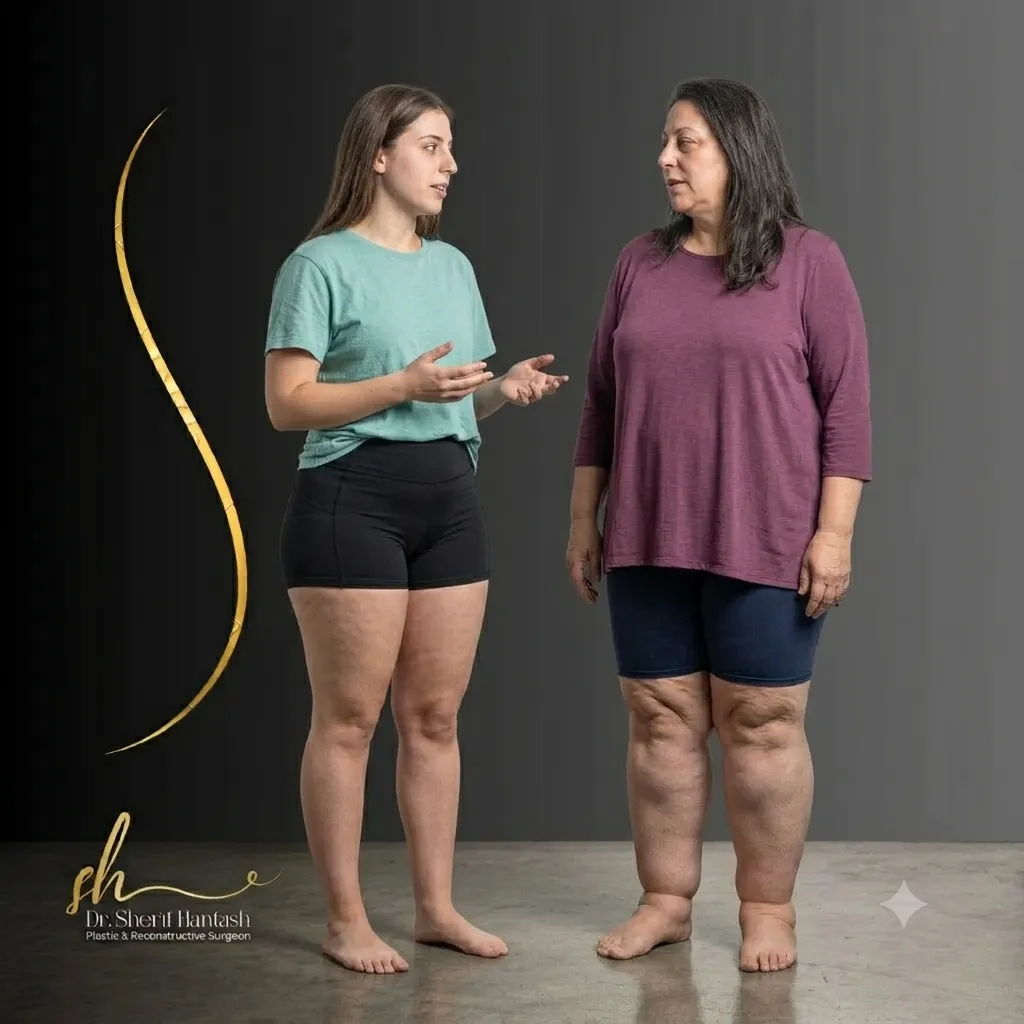
- Physical Features: Large, prominent lobules or folds of fat deform the limbs, drastically altering the body’s silhouette. The skin loses its elasticity and natural sheen, becoming noticeably sagging, hardened, and fibrotic.
- Associated Symptoms: Chronic, severe pain combined with highly restricted mobility. The sheer volume of the fat tissue places intense pressure on the joints, leading to advanced discomfort and significant swelling.
Stage 4: Lipo-Lymphedema
- Physical Features: At this advanced stage, the massive accumulation of fat severely obstructs the lymphatic system, leading to a secondary buildup of lymphatic fluid (lymphedema). The limbs become extremely swollen, and skin changes become severe and deeply pronounced.
- Associated Symptoms: Debilitating pain, profoundly limited mobility, and extensive swelling in the extremities. This stage also triggers immense psychological distress, as patients face a severe loss of independence and deep dissatisfaction with their disproportionate body shape.
Learn about:
Lipedema Types
In addition to the progressive stages, lipedema is also classified into five distinct types based on the anatomical areas where the abnormal fat accumulation occurs. Understanding your specific type can help target treatments more effectively:
Type I:
Fat tissue accumulates primarily around the hips, buttocks, and upper thighs. At this stage, the accumulation is usually mild and does not significantly impair mobility or drastically alter the skin’s appearance.
Type II:
The fat deposition extends from the hips all the way down to the lower legs, sparing the ankles completely. A characteristic feature of this type is that the legs assume a column-like appearance, while the ankles retain their natural, slender shape.
Type III:
This type involves the entire lower extremity, with fat accumulating from the upper thighs down to the ankles. Patients with Type III often experience substantial mobility challenges and a prominent disproportion between the upper and lower body.
Type IV:
Fat accumulates predominantly in the upper arms. This often occurs concurrently with fat accumulation in the legs, leading to a persistent feeling of heaviness and restricted movement in the arms.
Type V:
This type is characterised by a combined accumulation of lipedema fat in both the arms and legs simultaneously, with varying degrees of severity in each limb.
Learn more about:
Treatment Options For Lipedema Stages
The choice of treatment is heavily dependent on the progression of the disease, with interventions tailored specifically to support patients through the different lipedema stages:
- Early Stages (Stage 1): In the initial phase, conservative management is often sufficient to alleviate symptoms and slow down disease progression. This typically includes:
- Using medical-grade compression garments to support tissues.
- Undergoing regular manual lymphatic drainage (MLD) sessions to stimulate fluid movement.
- Advanced Stages (Stages 2, 3, and 4): At these stages, the best long-term treatment for removal of diseased tissue, reduction of chronic pain, and restoration of mobility is specialised surgical options such as targeted liposuction and skin-tightening procedures.
Don’t wait for symptoms to progress. Contact Dr. Sherif Hantash’s clinic today to book your private consultation and take the first step toward lasting relief and confidence.
Beyond Marketing—Toward Lasting, Refined Beauty
True body contouring results are not about exaggerated promises; they are about balance, harmony, and long-term satisfaction.
You can move beyond the advertising hype and achieve sophisticated, harmonious, and long-lasting beauty with Dr. Sherif Hantash.
Book your personalized consultation today and begin your journey toward a sculpted silhouette designed specifically for you.